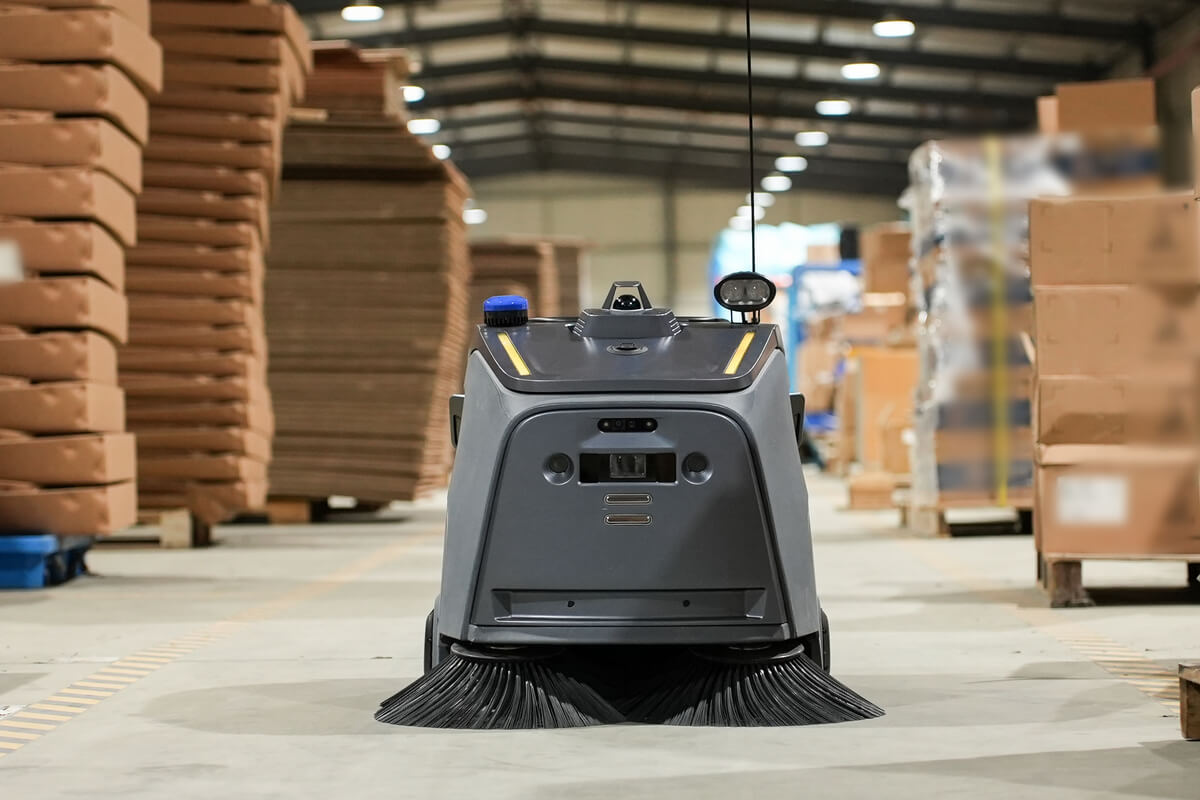
Industrial Floor Cleaning Robots: Efficiency, Control, and Automation
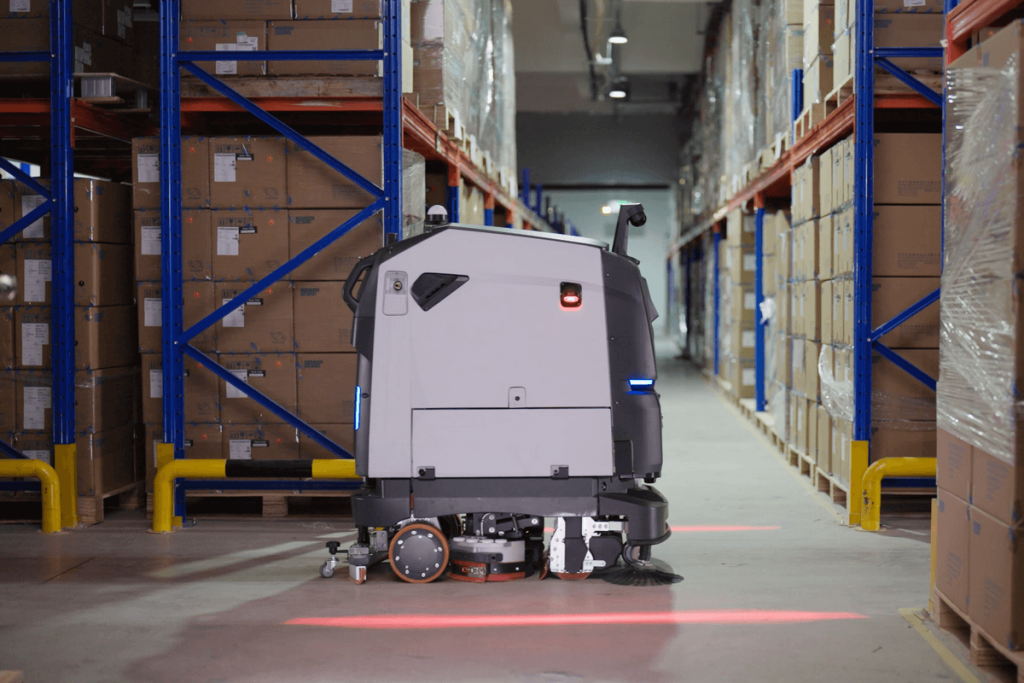
If you manage large facilities, high foot traffic, and constant pressure to reduce operating costs, an industrial floor cleaning robot is no longer an exotic solution. Increasingly, it is becoming a logical operational decision. Across retail, logistics, hospitality, healthcare, and office buildings, floors need to be cleaned on time, consistently, and without complete reliance on staff availability. This is where the difference between traditional mechanized cleaning and true automation becomes clear.
An autonomous cleaning robot does far more than replace a conventional ride-on or walk-behind scrubber operated by a person. It transforms the way cleaning is planned, executed, and verified. For facility managers and operations directors, the objective extends beyond maintaining clean floors. It is about gaining control over a repetitive, cost-sensitive process that is difficult to standardize when teams are understaffed or employee turnover is high.
What an industrial floor cleaning robot solves in practice
In many organizations, the challenge is not the lack of cleaning equipment—it is consistency. One shift may clean an area thoroughly, another only adequately, while a busy period often results in superficial cleaning. This is precisely where an industrial floor cleaning robot delivers value: repeatable performance, predefined routes, scheduled cleaning sessions, and detailed reports showing exactly what was cleaned and when.
This is particularly important in environments where cleanliness directly influences customer perception, safety, and user experience. In a large retail store, dirty floors immediately create an impression of neglect. In hospitals and healthcare facilities, the stakes are even higher, with hygiene, traceability, and operational discipline becoming critical requirements. In warehouses, properly maintained floors also contribute to safer internal traffic and smoother operations.
An autonomous robot offers much more than independent navigation. Equipped with advanced sensors, intelligent mapping, obstacle avoidance, and autonomous route planning, it can operate during periods when human staff are better assigned to more complex or variable tasks. Instead of dedicating employees to repetitive cleaning across large areas, businesses can deploy them where human judgment and intervention provide greater value.
When it makes sense to invest in an industrial floor cleaning robot
Not every facility benefits from automation in the same way. Some environments deliver an immediate return on investment, while others require careful implementation before measurable benefits appear.
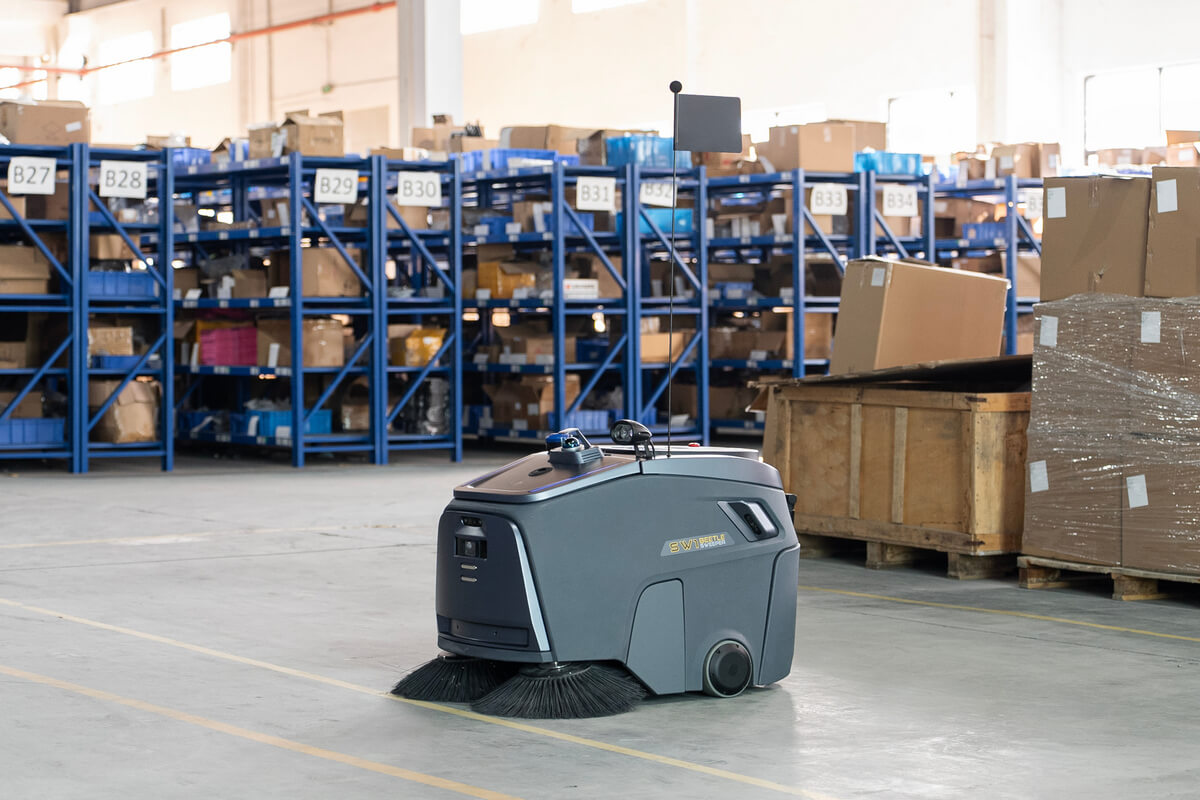
Industrial floor cleaning robots provide the greatest value in facilities with large, open, or semi-structured spaces that require recurring cleaning routines. Hypermarkets, airports, logistics centers, universities, hospitals, large showrooms, and office buildings with extensive common areas are ideal examples. When cleaning follows the same routes, schedules, and operational requirements every day, automation produces highly visible results.
Automation also makes strategic sense for organizations facing labor shortages. Finding qualified cleaning staff has become an ongoing challenge rather than an occasional issue. In this context, a cleaning robot should not simply be viewed as a replacement for personnel, but as a tool that ensures operational continuity. It reduces dependency on recruitment for repetitive tasks while maintaining consistent service delivery.
On the other hand, facilities with highly fragmented layouts, constantly changing obstacles, frequent reconfigurations, or numerous small spaces requiring diverse manual interventions may achieve different levels of return depending on the robot selected and the implementation strategy. Not every robot is suitable for every building layout, making proper assessment just as important as choosing the equipment itself.
Measuring value beyond the purchase price
One of the most common mistakes is comparing the cost of an autonomous cleaning robot solely with the purchase price of a conventional scrubber dryer. The correct comparison should be made at the process level.
How much does it currently cost to clean a specific number of square meters each day? How many labor hours are required? How consistent is the cleaning quality? What happens when staff members are absent? How often do cleaning tasks need to be repeated? How easily can cleaning performance be documented?
An autonomous robot changes this equation by reducing the amount of human labor required for repetitive cleaning, standardizing cleaning routes, and operating according to predictable schedules. In addition, many robotic solutions provide comprehensive usage data, cleaning reports, and remote monitoring capabilities, allowing managers to make decisions based on measurable performance rather than assumptions.
The true value extends beyond direct labor savings. It also comes from reducing variations in cleaning quality, making better use of available staff, enhancing the professional appearance of facilities, and enabling organizations to scale cleaning operations without proportionally increasing headcount. For cleaning service providers, this can result in better-controlled contracts and healthier profit margins. For facility operators, it means less pressure on supervisors and greater operational predictability.
Choosing the right industrial floor cleaning robot
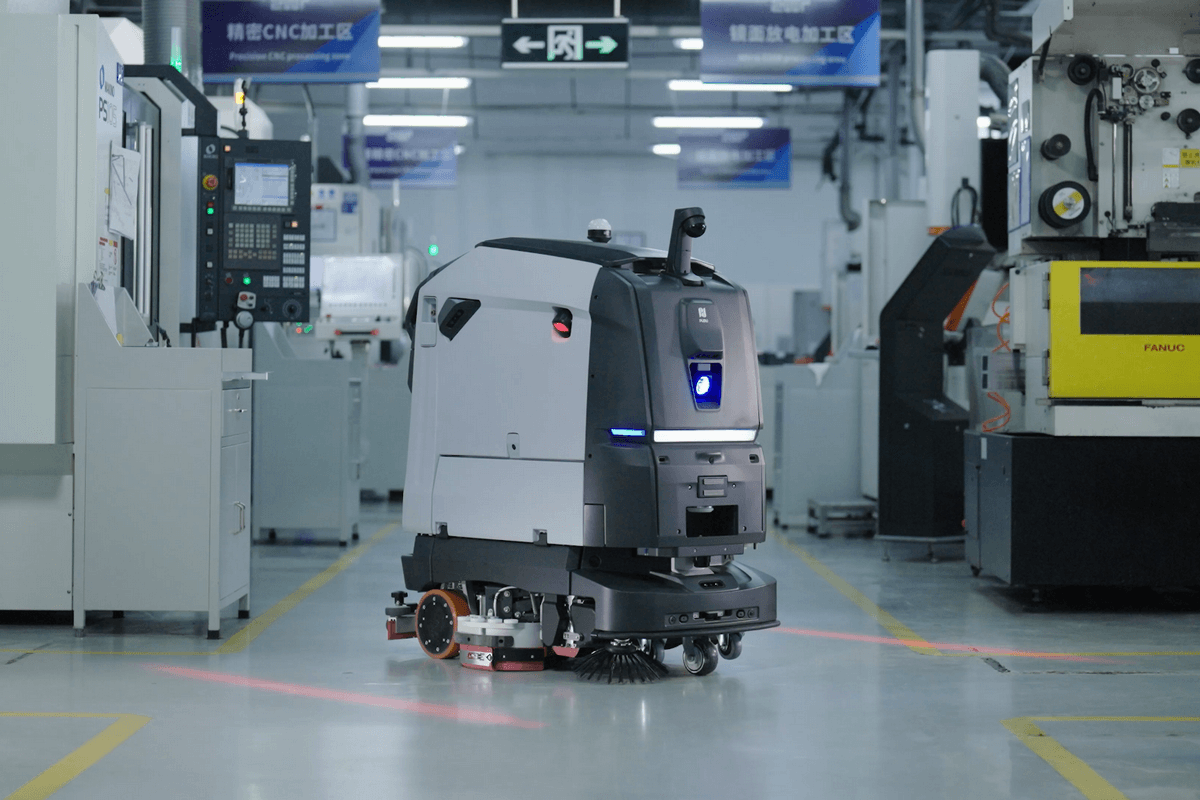
There are significant differences between robotic cleaning solutions. While theoretical cleaning capacity per hour is an important specification, it tells only part of the story. In practice, buyers should evaluate the facility size, layout, floor type, cleaning frequency, obstacle density, and traffic levels together.
A robot designed for shopping malls may be oversized or insufficiently agile for hotels. A machine that performs exceptionally well in warehouses may not be the ideal solution for healthcare facilities with different access restrictions and operational workflows. Battery life, tank capacity, charging speed, ease of operation, navigation performance, and the ability to operate safely in crowded environments all play an essential role.
Equally important is the quality of the support ecosystem. Successful implementation does not end with equipment delivery. Businesses need professional deployment, facility mapping, staff training, technical support, spare parts availability, software updates, and ongoing optimization as operations evolve. In the B2B market, the difference between a successful investment and a problematic one is often determined more by the integration partner than by the technical specifications alone.
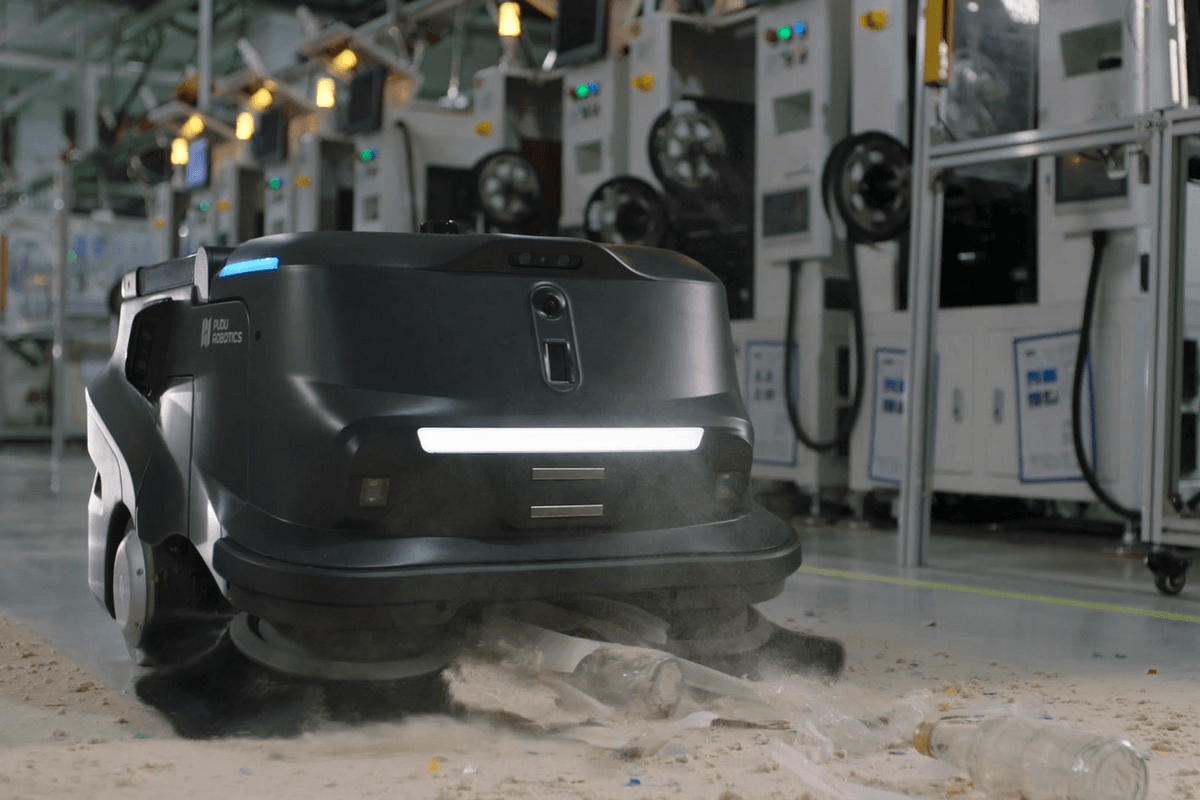
Successful implementation starts with the process, not the product
In projects that deliver strong results, selecting the robot is not the first step. The process begins with an operational assessment.
Which areas are suitable for fully autonomous cleaning? Which tasks should remain with human staff? During which hours will the robot operate? Who monitors performance, responds to exceptions, and analyzes cleaning data?
Without answering these questions, even the most advanced cleaning robot may never reach its full potential.
For this reason, implementation should be approached as an operational transformation project. Facility mapping, route planning, workflow definition, and employee training are all critical stages. Staff members need to understand that the robot is not making their work more complicated—it is making the entire cleaning operation more efficient. When change management is neglected, organizations often experience internal resistance, inconsistent usage, and the mistaken belief that the technology itself has failed.
The most successful implementations typically introduce robots gradually, beginning with clearly defined areas and use cases. Performance is measured, adjustments are made, and only then is deployment expanded. This is also why subscription and rental models have become increasingly attractive. They reduce the initial investment risk while allowing organizations to validate the operational model before committing to larger-scale deployment.
Understanding the limitations
Automation does not mean unlimited autonomy under every condition. A cleaning robot still requires a reasonably organized environment, relatively stable routes, and a basic level of operational discipline. If aisles are constantly blocked by pallets, promotional displays are randomly relocated, or furniture layouts frequently change without planning, cleaning efficiency will naturally decline.
Likewise, autonomous robots do not eliminate the need for human staff. Edge cleaning, difficult-to-access areas, unexpected spills, and unplanned cleaning tasks still require manual intervention. The most effective model is not humans versus robots—it is humans working alongside robots, each performing the tasks they handle best.
Organizational maturity also plays an important role. If cleaning processes are poorly defined, lack performance metrics, or are inconsistently managed, automation alone will not solve these underlying issues. Robots enhance well-designed operations but cannot fully compensate for ineffective management practices.
Why the market is moving toward flexible automation
Across Romania and neighboring markets, adoption of robotic cleaning continues to accelerate due to several converging factors: rising labor costs, persistent staffing shortages, higher quality expectations, and increasing demands from customers and facility owners. At the same time, robotic technology has matured to the point where organizations can confidently implement reliable, large-scale solutions rather than simply conducting technology demonstrations.
Companies that approach robotic cleaning as a long-term operational investment rather than an experiment typically achieve competitive advantages more quickly. Their decision is based not only on the equipment itself but also on the flexibility of the commercial model. Options such as outright purchase, subscription, or rental significantly influence investment decisions. Partners like Robotic Cleaning Solutions can provide additional value through a combination of extensive product portfolio, professional integration services, and regional technical support—particularly for organizations seeking to modernize cleaning operations without immediately committing to a rigid capital investment model.
Ultimately, choosing an industrial floor cleaning robot is not simply about purchasing another piece of equipment. It is a strategic decision about how your cleaning operation will function in the years ahead—whether it will continue to depend on improvisation or become predictable, standardized, and driven by measurable data. If operational efficiency is already a priority for your business, the right time to evaluate automation is not later – it is now.