Cleaning Robots for Healthcare Facilities: How to Ensure a Successful Implementation
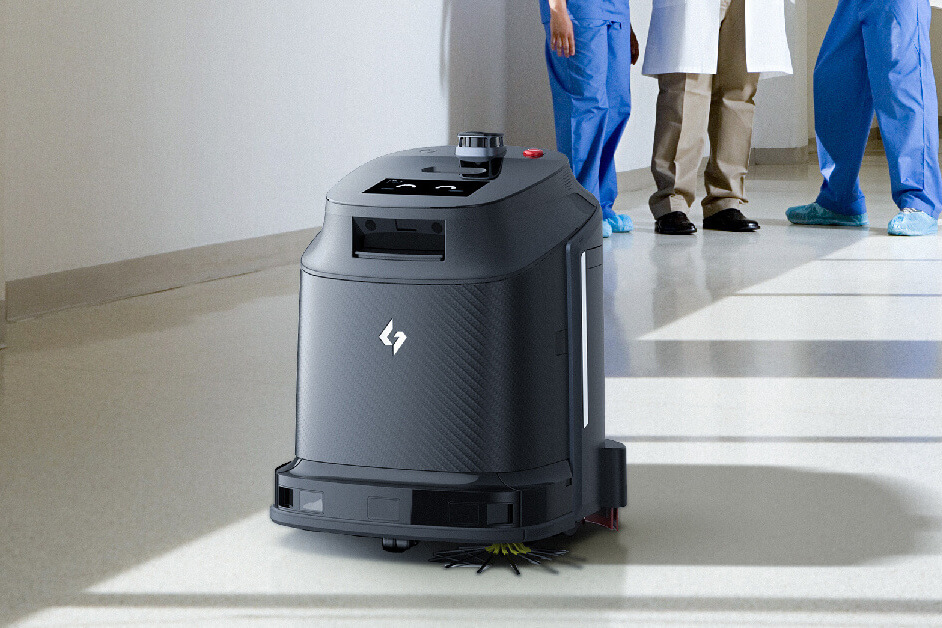
In a hospital, cleaning is not just a support function. It is an integral part of clinical operations, patient safety, and the daily pressure faced by operational teams. That is why a hospital cleaning robot must be evaluated differently from equipment designed for offices, retail parks, or administrative buildings. In healthcare, consistency, traceability, adaptability to sensitive workflows, and the ability to operate safely in environments with constant foot traffic are what truly matter.
For facility managers, administrative directors, and healthcare cleaning providers, the question is no longer whether automation makes sense, but where it delivers measurable results and under what conditions it is worth implementing. A robotic cleaning solution can reduce pressure on staff, standardize processes, and improve operational coverage, but it is not a complete replacement for a hospital’s cleaning and hygiene program. The real value comes when the technology is properly integrated into existing procedures rather than treated as a standalone purchase.
What a hospital cleaning robot must be able to do
In healthcare environments, performance is measured by much more than square meters cleaned per hour. A robot must deliver consistent cleaning quality, navigate safely around hospital beds, stretchers, carts, and medical staff, operate during different shifts, and provide meaningful data about completed tasks. It must also fit seamlessly within the facility’s internal cleaning protocols.
The most suitable applications are typically large, repetitive areas such as corridors, hallways, reception areas, waiting rooms, administrative offices, common access spaces, and selected outpatient areas. Wherever routes are predictable, cleaning frequency is high, and staff time is limited, robotic automation generally provides the fastest return on investment.
Occupied patient rooms, operating theatres, intensive care units, and areas requiring strict disinfection protocols remain environments where human expertise and dedicated procedures are indispensable. This is one of the most important distinctions: hospital automation delivers the greatest value when it takes over repetitive, time-consuming tasks rather than attempting to standardize areas that require human judgment and rigorous control.
Where do hospital cleaning robots deliver real value
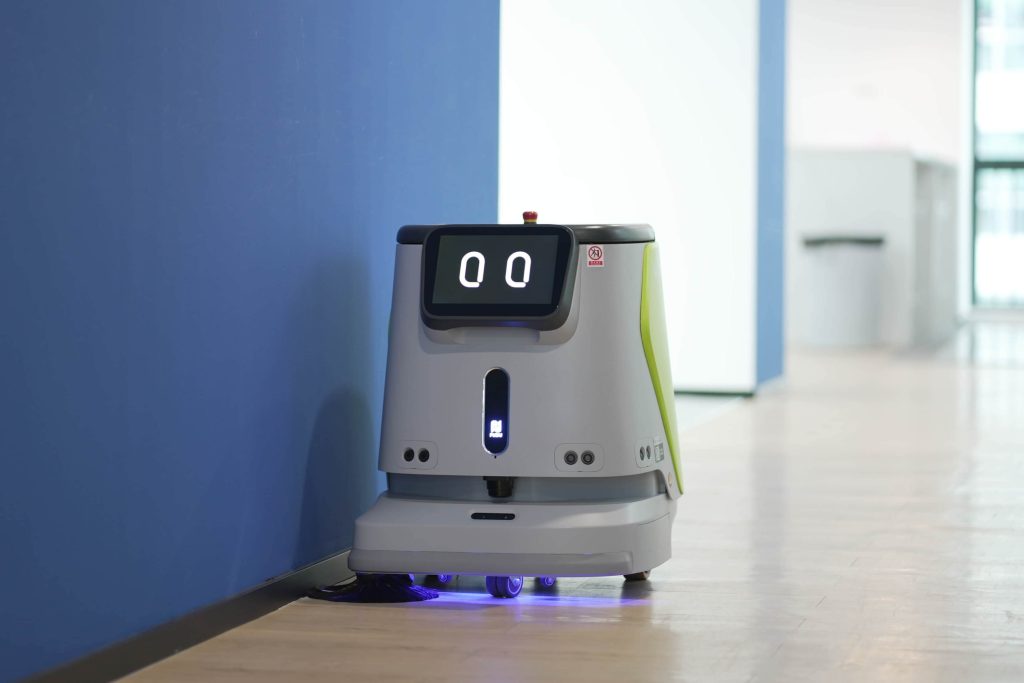
One of the greatest benefits of a hospital cleaning robot is the consistency of execution. Autonomous equipment does not become fatigued, skip sections because of time pressure, or vary in performance from one shift to another. It follows the same cleaning routines predictably and repeatedly. For management, this translates into greater control over cleaning frequency and more efficient use of available personnel.
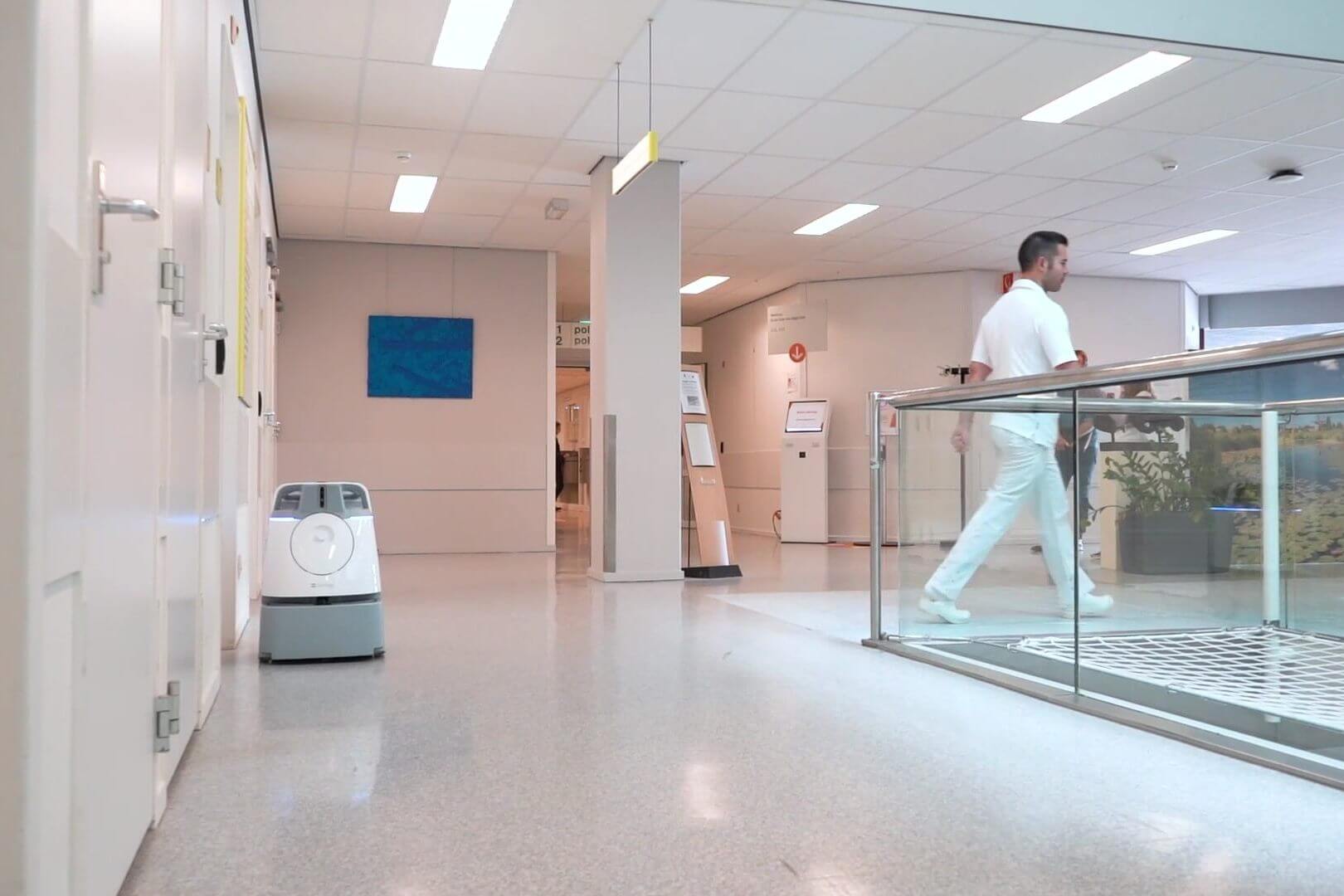
In many hospitals, the challenge is not simply a shortage of staff but the fact that employees spend a significant portion of their time maintaining extensive corridors and common areas. These repetitive tasks consume valuable labor hours without improving operational flexibility. When these areas are assigned to autonomous robots, cleaning personnel can focus on tasks that require human intervention, such as detailed cleaning, visual inspections, disinfection, replenishing supplies, and responding quickly to unexpected situations.
Another often underestimated advantage is data. Modern robotic cleaning systems generate reports on cleaning routes, operating time, covered surface area, completed cleaning cycles, and operational interruptions. In an environment where audits, compliance, and documentation are becoming increasingly important, this visibility provides tangible value. While data alone does not guarantee cleaning quality, it supports standardization and enables evidence-based decision-making rather than relying on assumptions.
Practical criteria for selecting a hospital cleaning robot
When evaluating a hospital cleaning robot, it is tempting to focus primarily on technical specifications such as power, battery life, tank capacity, dimensions, or cleaning speed. While these characteristics matter, they are only part of the equation. Effective selection always begins with the intended operational scenario.
The first criterion is compatibility with the facility itself. Corridor widths, obstacle density, flooring materials, ramps, thresholds, and mixed-traffic areas all directly influence which robot is most appropriate. A machine that performs exceptionally well in large open spaces may not be suitable for hospitals with highly segmented layouts.
The second criterion is navigation and safety. In healthcare environments, robots must respond reliably to unexpected obstacles, moving people, mobile medical equipment, and constantly changing traffic patterns. It is not enough for a robot to perform well during a controlled demonstration. It must operate consistently in a dynamic, real-world hospital environment.
The third criterion is integration into the hospital’s daily schedule. Some facilities can automate cleaning primarily during nighttime or low-traffic periods. Others require robots to operate safely throughout the day in public areas. In these situations, noise levels, obstacle avoidance capabilities, response times, and ease of manual intervention become especially important.
The fourth criterion is after-sales service and local support. In hospitals, equipment downtime is not merely a technical inconvenience—it quickly becomes an operational issue. Response times, spare parts availability, staff training, and the supplier’s ability to optimize the deployment after installation all have a direct impact on long-term success.
Robots do not replace cleaning teams – they reorganize them
One of the least productive debates surrounding cleaning automation is whether robots will replace human workers. In hospitals, reality is much simpler. Staff shortages, employee turnover, and ongoing cost pressures already make it difficult to maintain the desired cleaning standards. In most cases, robotic automation is a smarter way of reallocating existing resources.
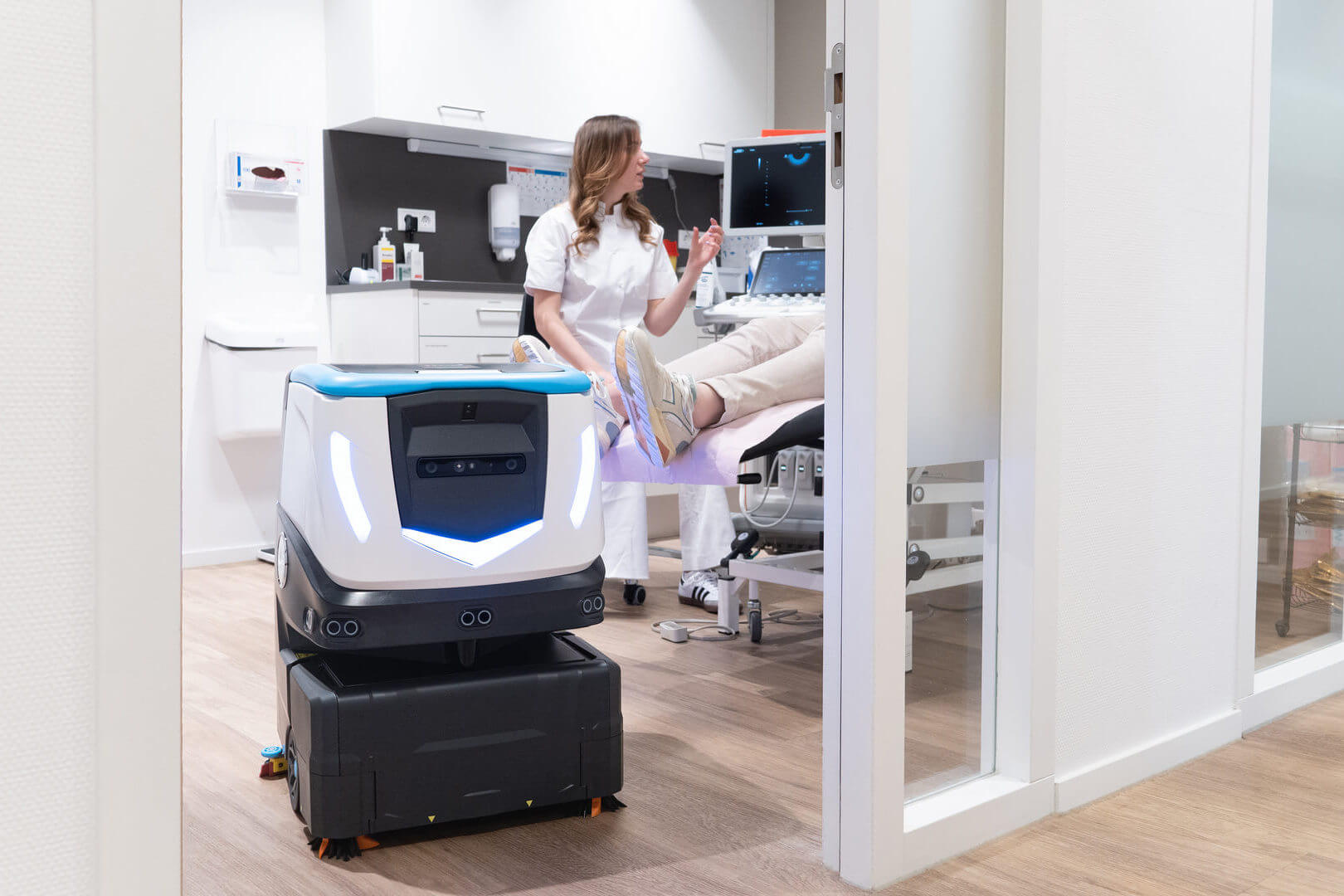
An autonomous cleaning robot can handle routine floor scrubbing and daily maintenance of designated routes, while human teams concentrate on high-priority areas requiring specialized cleaning, rapid response, detailed inspections, and decision-making. In other words, robots reduce repetitive work and free employees to focus on higher-value responsibilities.
However, this model succeeds only when supported by clearly defined procedures. Someone must be responsible for launching cleaning cycles, checking consumables, responding to alerts, managing blocked routes, documenting activities, and defining which areas are automated and which remain entirely manual. Without these operational guidelines, even an excellent robot may appear underutilized.
What does successful implementation look like
Hospital deployments should never be based solely on product brochures. The critical stage is the on-site assessment. This evaluation determines floor types, traffic patterns, eligible cleaning zones, operating schedules, and how the robot will interact with staff and patients. A meaningful demonstration is not simply about whether the robot can clean the floor, but whether it can become part of the hospital’s daily routine without creating operational friction.
Once the assessment is complete, cleaning routes are configured and responsibilities are assigned. This is often the point where projects either succeed or fail. When staff clearly understand what the robot is responsible for and which tasks remain manual, adoption tends to be rapid. When responsibilities remain unclear, the technology often ends up being viewed as an isolated experiment rather than an operational tool.
An experienced implementation partner such as Robotic Cleaning Solutions can make a significant difference during this phase. The value extends beyond product selection to tailoring the solution to the hospital’s operational requirements, offering flexible acquisition models, and providing ongoing local technical support that remains valuable long after the equipment has been delivered.
Understanding the limitations from the start
Any decision-maker evaluating a hospital cleaning robot should begin with realistic expectations. Robots do not independently solve every hygiene challenge, nor do they automatically compensate for inefficient cleaning processes. If floors are constantly obstructed, routes change unpredictably, or operational discipline is lacking, results will inevitably fall short of expectations.
There are also inherent limitations related to clinical environments. Automation excels in repetitive, high-volume cleaning tasks but is less suitable in spaces where every intervention must be adapted to immediate clinical circumstances. For this reason, successful projects begin with careful segmentation of the facility rather than the unrealistic expectation of complete automation.
Financial considerations also play an important role. For some hospitals, purchasing equipment outright is justified by extensive daily use and high operational volumes. For others, leasing or subscription models lower the initial investment and allow controlled testing before expanding deployment. The right approach depends on budget, adoption strategy, and operational objectives.
How to know when the investment makes sense
Investing in a hospital cleaning robot is worthwhile when your facility has extensive repetitive floor areas, high labor costs for manual cleaning, ongoing recruitment challenges, or increasing requirements for cleaning traceability. It is equally valuable when consistency is just as important as productivity. In healthcare, consistent execution is often more important than isolated peak performance.
On the other hand, automation should never be implemented purely for marketing purposes or because the technology appears attractive. If there are no suitable areas for deployment, technical support is uncertain, or the organization is not prepared to work with standardized procedures and operational data, the project is likely to create frustration rather than efficiency.
For hospitals that implement robotic cleaning strategically, robotics is neither a decorative innovation nor a box to check on a digital transformation roadmap. It is an operational decision that directly improves productivity, optimizes workforce allocation, and helps maintain predictable cleaning standards in an environment defined by constant change and continuous pressure.
When evaluating your next step, do not ask only which robot you should purchase. Ask which operational process you want to stabilize, which members of your team you want to relieve of repetitive work, and what level of operational control you want to achieve every single day.