Cleaning Robots in Retail Areas: How to Integrate Automation into an Ever-Changing Environment
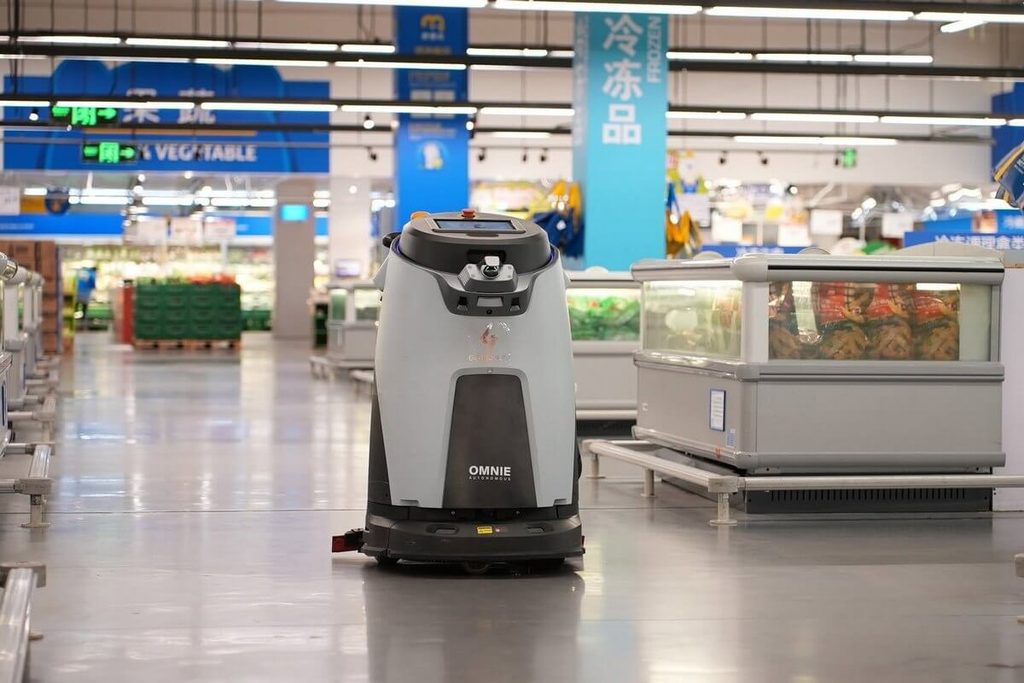
In a supermarket, the floor never really has any downtime. Traffic starts early, intensifies during peak hours and continues until closing, while cleaning needs to take place without disrupting customer flow or affecting the shopping experience. This is why a cleaning robot for a supermarket is no longer simply a technology showcase, but an operational solution that can help maintain consistent hygiene standards, reduce pressure on staff and make cleaning more predictable.
For retail, the question is not simply whether a robot cleans well. The real question is whether it can operate consistently, safely and at a controlled cost in a dynamic environment with shelves, promotional displays, temporary pallets, abandoned shopping baskets and a continuous flow of customers. This is where the difference becomes clear between simply purchasing a machine and implementing a solution that delivers results.
Where Does a Cleaning Robot Add Value in a Supermarket?
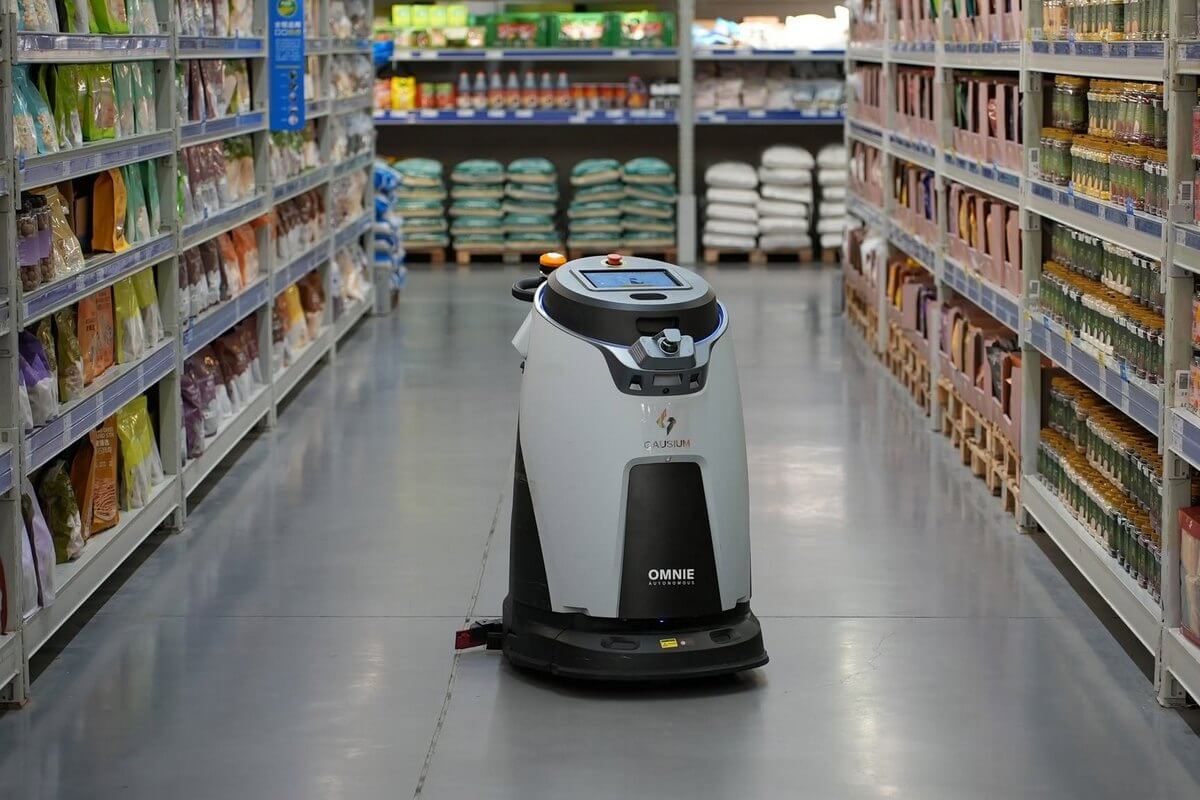
In retail, floor cleaning is a repetitive, measurable operation that is particularly affected by staff shortages. This is precisely where automation makes the most sense. A scrubbing or sweeping robot can take over large, repetitive cleaning routes, particularly main aisles, perimeter areas, entrances and open spaces between checkouts and shelving.
The real value appears when staff no longer have to spend hours covering large floor areas and can instead focus on tasks that require direct human intervention – spot cleaning, responding to incidents, sanitising sensitive areas or replenishing consumables. In other words, the robot does not completely replace the operator; it shifts human work towards areas where people genuinely add value.
For retail chains, another important advantage is standardisation. Manual cleaning can vary from one shift to another and from one location to another. A properly configured robot follows the same routes, at the same frequency and with consistent parameters. This matters for brand standards, internal audits and quality control.
What Type of Robot Is Suitable for a Supermarket?
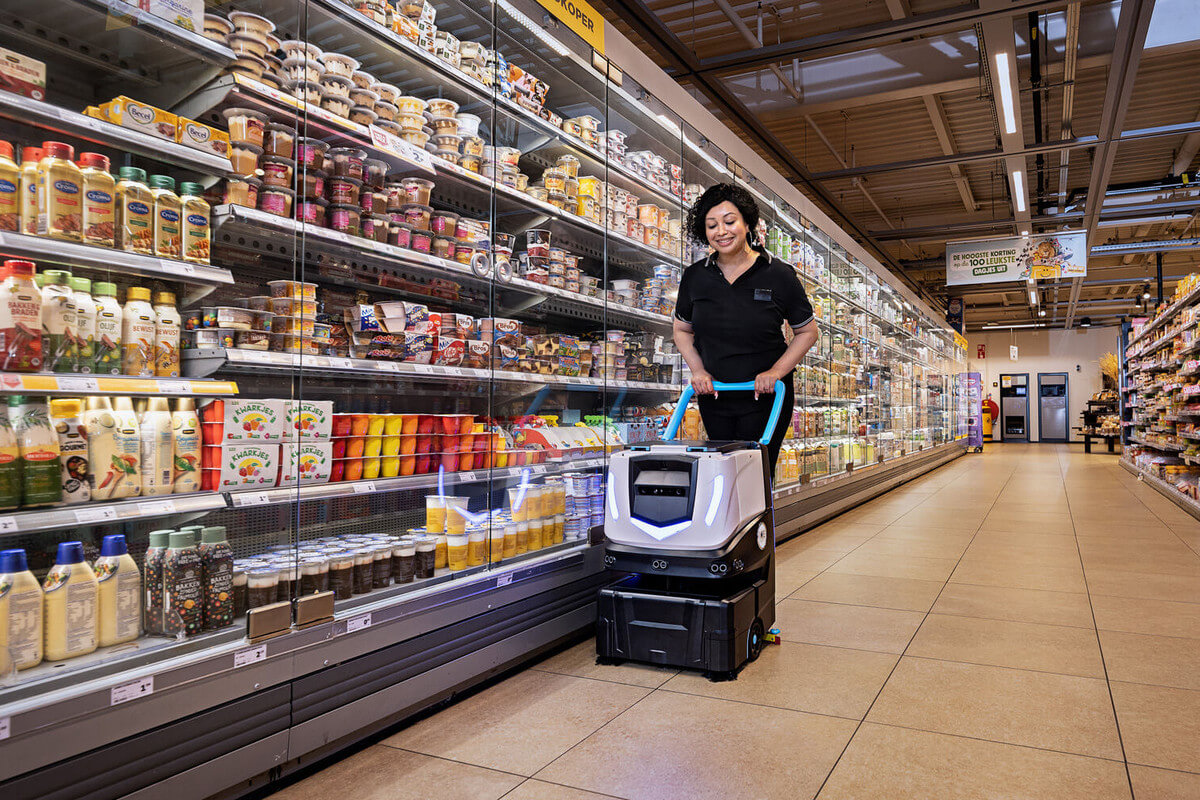
Not every professional cleaning robot is suitable for food retail. In these environments, the combination of autonomy, navigation, hourly productivity and performance in mixed environments is particularly important, as customers, employees, shopping carts and unexpected obstacles are all present at the same time.
Floor-Scrubbing Robots
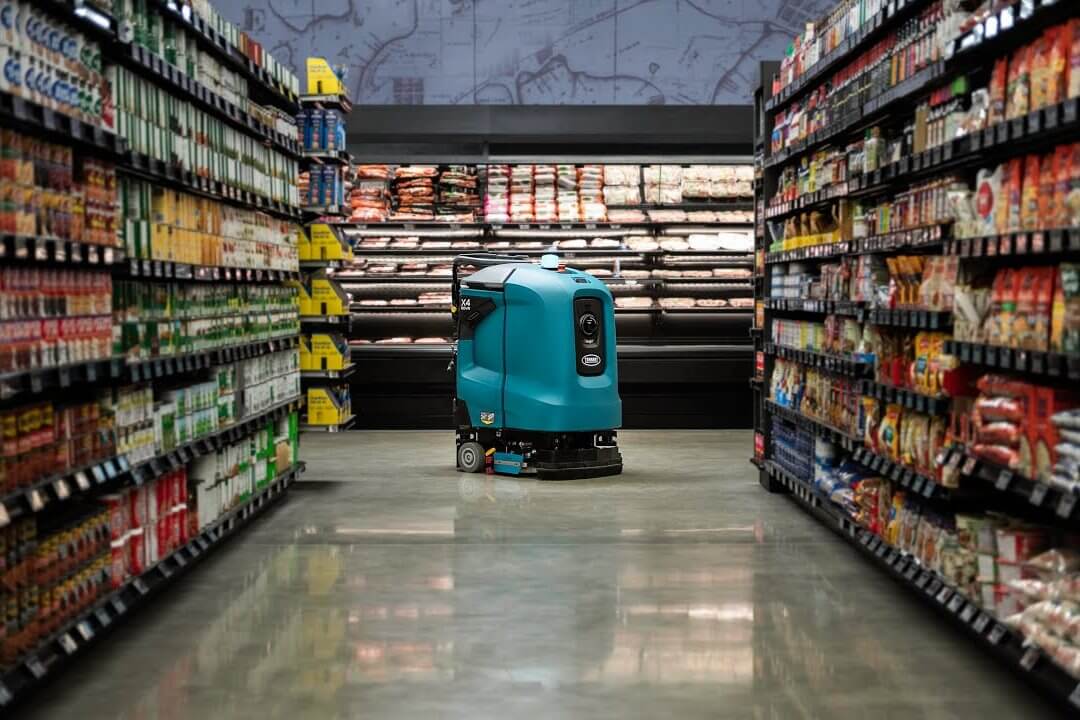
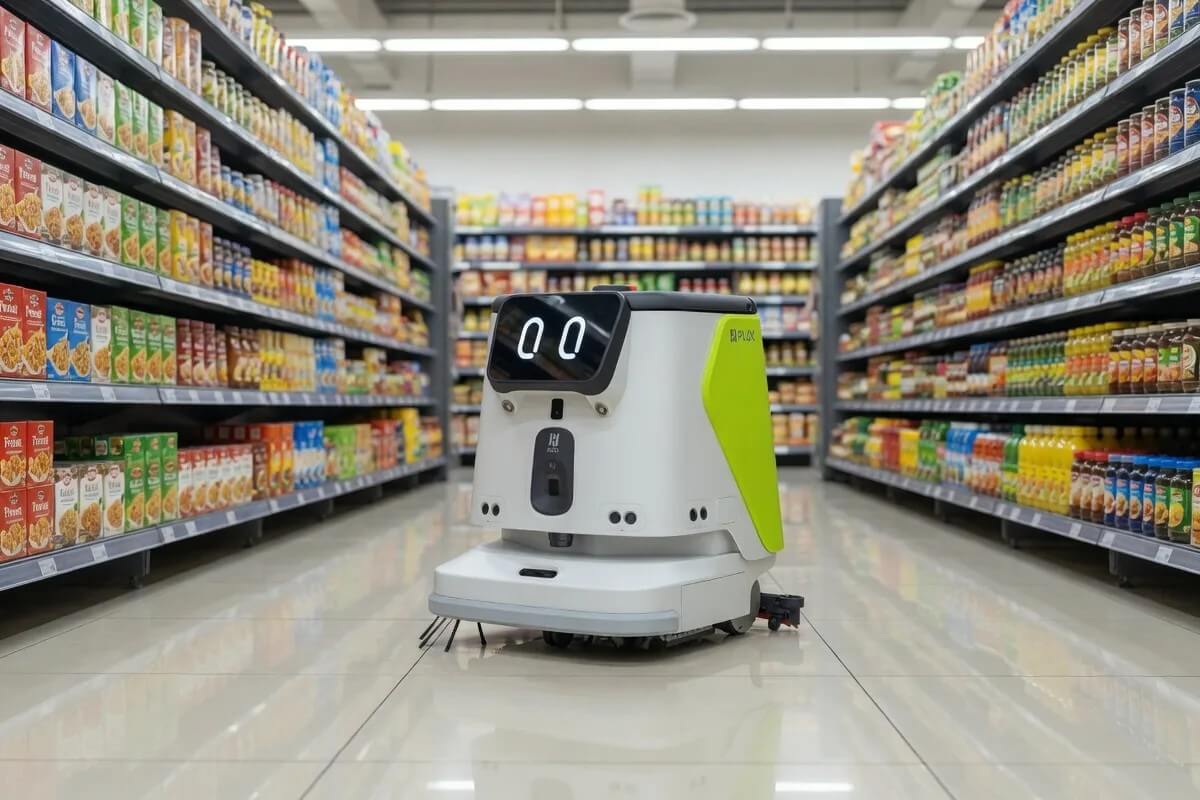
These are generally the most suitable choice for medium and large supermarkets. They can cover extensive areas, operate according to scheduled routines and maintain a visible level of cleanliness throughout the day or outside opening hours. In high-traffic areas, automated scrubbing helps keep floors clean without relying entirely on staff availability.
Sweeping or Vacuuming Robots
In certain store formats, particularly where there are areas with fine dust, dry debris or entrances exposed to outdoor dirt, a sweeping or vacuuming robot can complement floor scrubbing very effectively. It may not always be sufficient on its own, but it can significantly reduce the workload before wet cleaning.
Hybrid Solutions or Combined Scenarios
In large locations, the right solution is not necessarily a single robot. In some cases, a combination of robotic cleaning for large floor areas and manual intervention for corners, narrow spaces and congested areas works better. The decision depends on the store layout, operating schedule and required cleaning standards.
What Criteria Really Matter When Selecting a Robot?
When evaluating a cleaning robot for a supermarket, the first temptation is often to look at price or stated autonomy. In practice, these are only part of the equation. What matters more is how well the equipment integrates into day-to-day operations.
The first criterion is navigation. A supermarket environment changes frequently. Promotional displays appear, pallets are temporarily placed in different areas, gondola ends are reconfigured and unexpected obstacles arise. The robot needs to detect and avoid these changes without becoming excessively slow or requiring constant resets.
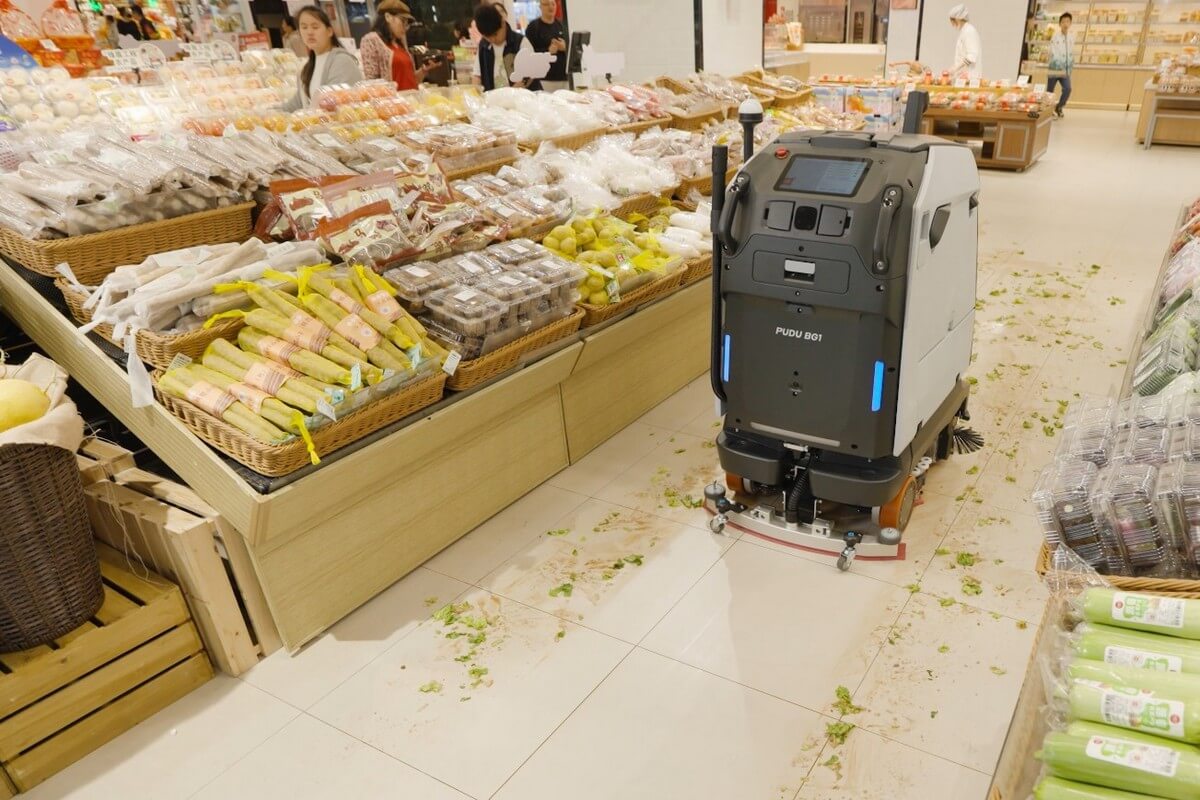
The second criterion is real-world productivity, not just the figures stated in the technical specifications. Impressive performance figures may look good on paper, but actual store conditions can tell a different story. If the robot loses time navigating around obstacles, frequently requires staff intervention or cannot operate efficiently under the real conditions of the location, its operational performance will decrease. This is why **on-site testing** is one of the most important stages before making an implementation decision and can provide insights that no sales presentation can replace.
The third criterion is data management. In modern retail, it is not enough to know that the equipment has started operating. You need visibility into completed routes, operating hours, alerts, coverage and potential blockages. Data-driven cleaning means operational control, not just automation.
Daily maintenance is equally important. A high-performance robot that is difficult to maintain will quickly lose ground to a slightly simpler solution that store staff can use and manage easily. Tanks, consumables, charging and equipment cleaning should all be manageable without excessive effort.
What Results Are Realistic – and What Are Not?
Automation delivers efficiency, but expectations need to remain realistic. A robot will not solve every cleaning challenge in a supermarket on its own. It will not completely replace the cleaning team, nor will it perform optimally in a location with little or no operational discipline.
What it can do very well is take over repetitive work across large floor areas, increase cleaning frequency and reduce dependence on operator availability for standard tasks. It can also contribute to better cost control over the medium term, particularly in the context of staff shortages and high employee turnover in the cleaning sector.
What should not be expected is perfect performance under every condition. If the store is extremely busy, with frequent layout changes and continuous logistics operations during opening hours, the optimal operating window may be limited. In these situations, scheduling the robot during suitable time slots matters more than impressive specifications.
Purchase, Subscription or Rental?
For many companies, the main barrier is not the usefulness of the technology itself, but how to enter the project. This is why the financial model matters almost as much as the equipment selected.
Direct purchase makes sense for operators with clearly defined investment budgets, stable processes and plans to expand across multiple locations. It is a suitable option when you want full control over the asset and expect to depreciate the investment over a longer period.
A subscription or rental model may be more suitable when you want to test the operational model, avoid a significant initial CAPEX investment or scale gradually. In retail, this flexibility is particularly valuable when stores vary in size and you want to validate the scenario before proceeding with a large-scale rollout. For many retail chains, this is a pragmatic route towards automation.
Implementation Makes the Difference!
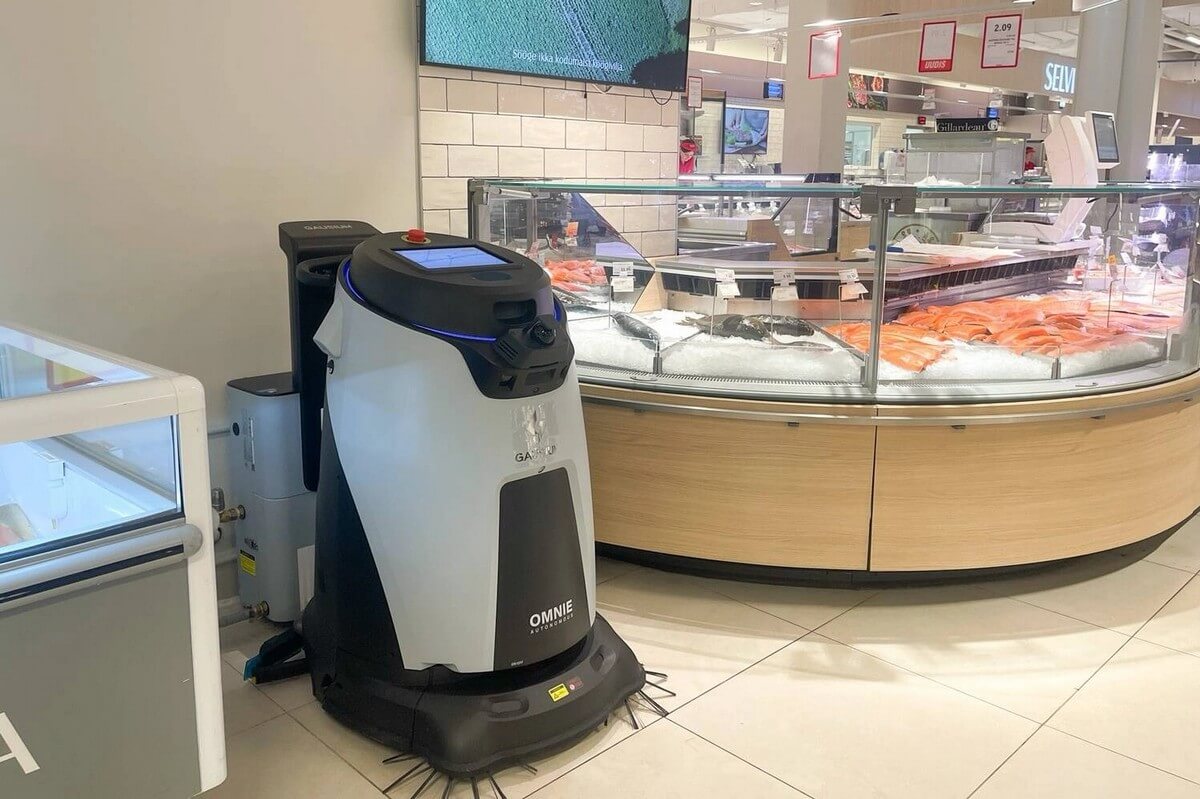
A high-performance robot does not guarantee results if it is implemented without a clear strategy. By contrast, the right equipment, properly integrated into the workflow, can deliver real and measurable benefits. Ultimately, the difference lies in how the technology is integrated into day-to-day operations.
First, the location needs to be mapped and assessed realistically. Floor area alone is not enough. Obstacle density, flooring type, frequency of layout changes and available cleaning windows all need to be considered. The next step is to define routes and operating rules: when the robot starts, who checks it, where daily maintenance is carried out and how exceptions are handled.
Staff training is essential. Even though the robot operates autonomously, store employees need to understand what it does, what it does not do and how to support it within the daily workflow. Without this step, incorrect use, unrealistic expectations and internal resistance can quickly arise.
Local support is equally important. In a supermarket, any piece of equipment that remains out of operation for too long becomes an operational problem. This is why an implementation partner needs to provide more than delivery: configuration, technical support and adjustments based on actual usage are also essential. This is why companies choose specialised integrators, rather than simply equipment suppliers. Robotic Cleaning Solutions follows exactly this approach in this type of project: selection, integration and support, rather than simply delivering a product.
Is Your Supermarket Ready for Cleaning Automation?
If you operate a supermarket with a significant floor area, constant traffic, pressure on labour costs and a need to standardise cleaning across shifts, this may be a good time to assess automation. This is particularly relevant if the cleaning team is understaffed or staff availability fluctuates frequently.
If, however, the location is very small, has many narrow areas, undergoes major daily changes to commercial fixtures or has an operating schedule that leaves almost no suitable cleaning windows, a careful assessment should be carried out before making a decision. In some cases, the right approach is to run a pilot project in a single store rather than immediately rolling out the solution across the entire network.
The best choice is not the robot with the longest list of features, but the one that fits your store’s operational processes and can be supported through service, training and monitoring. In retail, technology delivers results when it becomes part of the right process, not simply when it looks impressive in a demonstration.
If you see cleaning simply as a cost centre that needs to be “covered”, you will compare prices. If you see it as a process that influences safety, store image and operational efficiency, then a well-selected robot becomes a sound business decision.