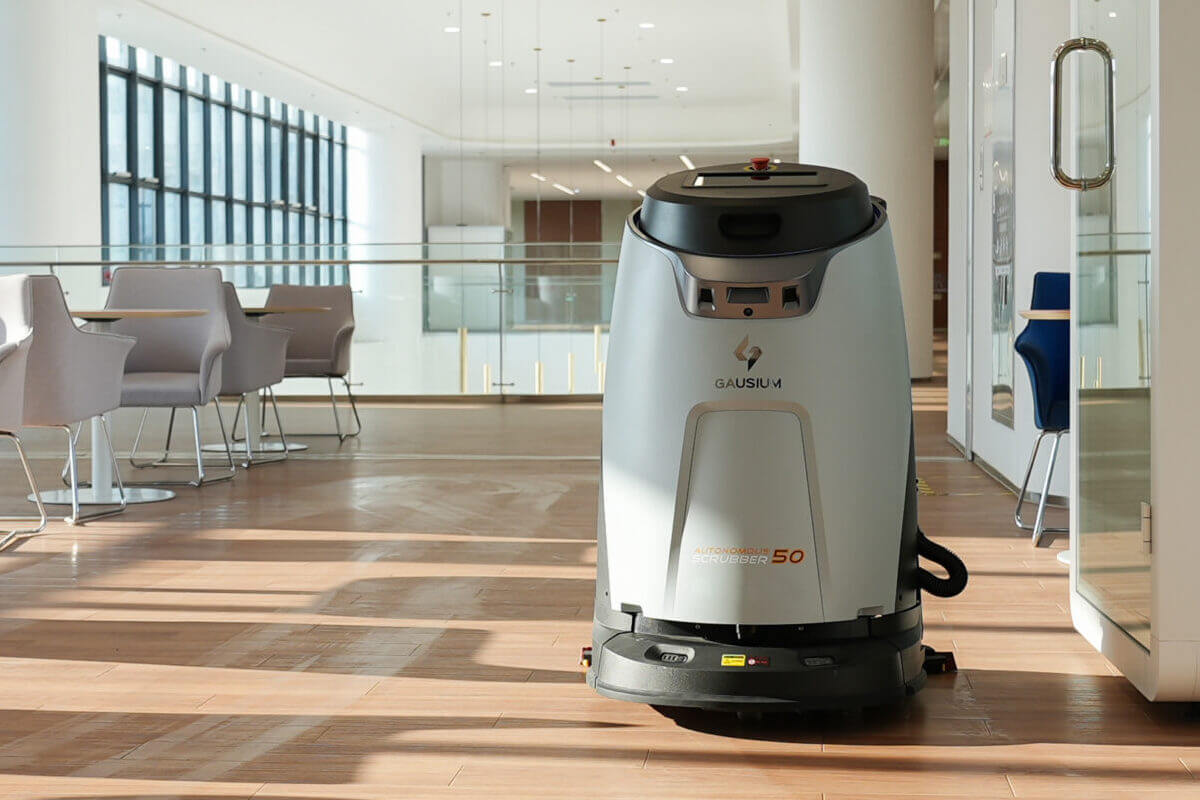
Cleaning Robots for Schools
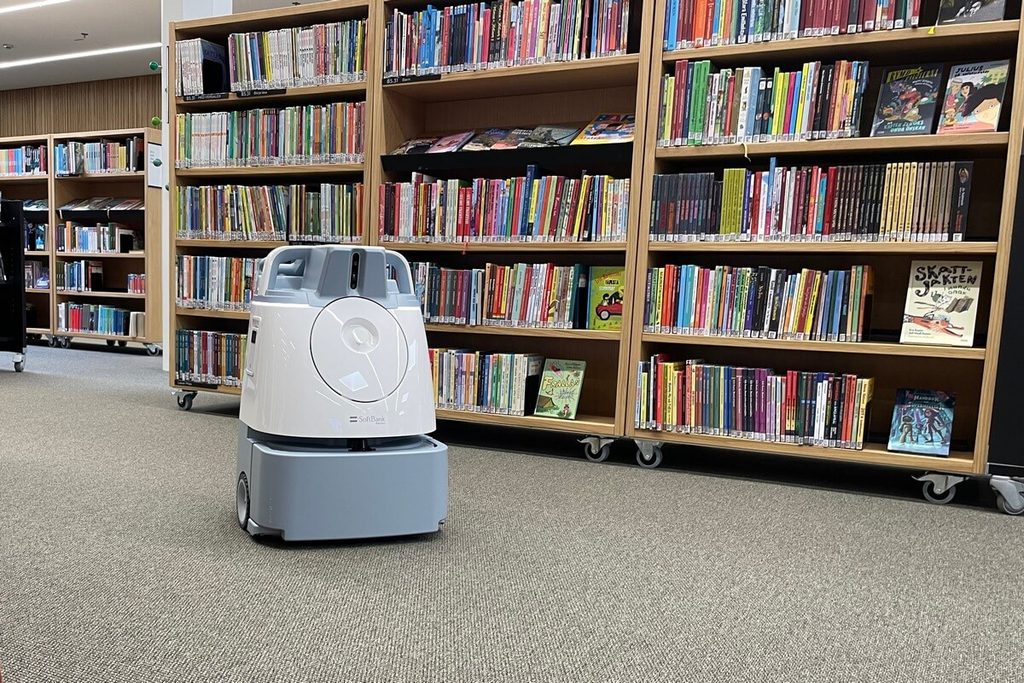
At 6:00 a.m., a large school already has corridors that need cleaning, footprints and marks on the floors, dust brought in from outside, and classrooms that must be ready before the first bell rings. In this context, a cleaning robot for schools is not a showcase feature, but a solution that supports operational continuity, standardization, and better resource management.
In educational institutions, the pressure on cleaning teams is constant. Foot traffic is high, available cleaning windows are short, and hygiene expectations are higher than in many other types of buildings. This is precisely why automation should not be evaluated solely based on its purchase price, but rather on its impact on scheduling, cleaning quality, and service predictability.
Where does a cleaning robot for schools deliver the most value?
A school is not a uniform environment. It includes long corridors, classrooms, staff rooms, libraries, administrative areas, entrances exposed to dirt and debris, and sometimes sports halls or auditoriums. Not all these spaces can be automated with the same level of efficiency, and this is where the difference between a successful investment and one driven simply by the appeal of new technology becomes clear.
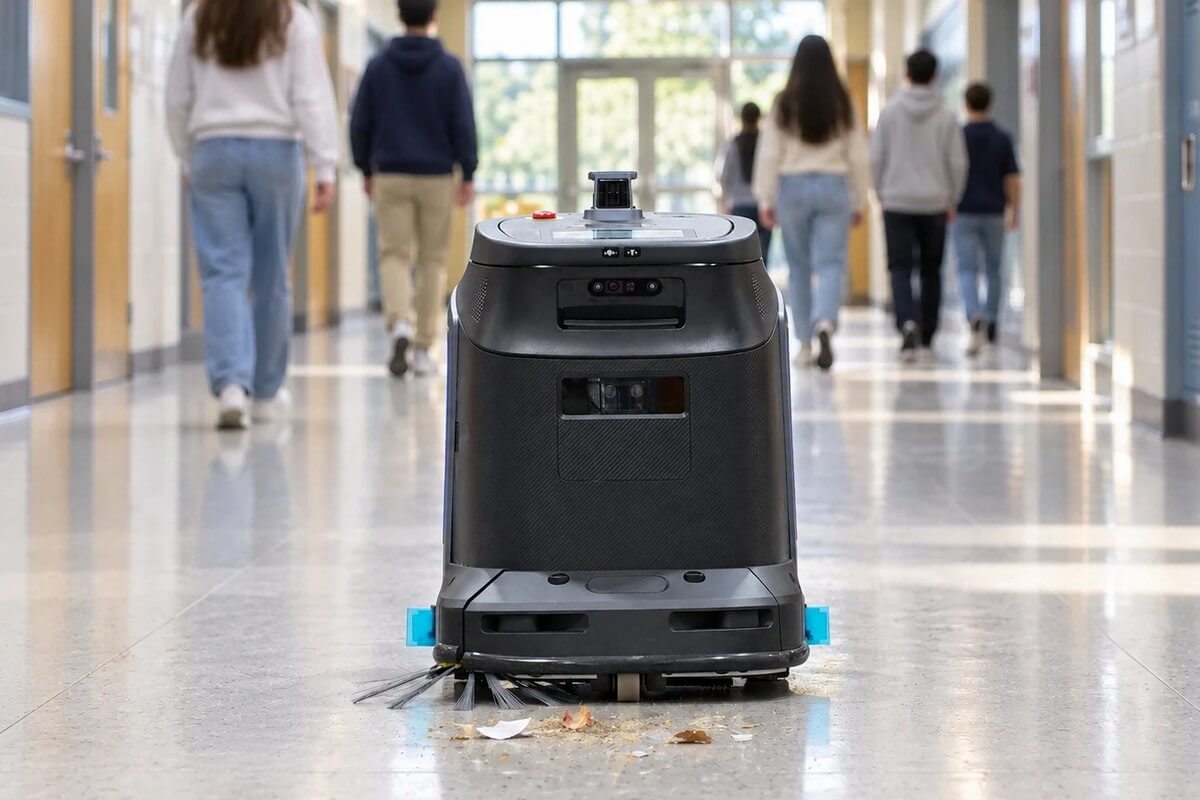
The greatest value comes from areas with repetitive cleaning routes and extensive floor surfaces. Corridors, main halls, reception areas, common spaces, and some large rooms are ideal for robotic vacuuming, sweeping, or floor scrubbing. Wherever cleaning staff repeat the same tasks every day, a robot can consistently take over these operations and deliver uniform cleaning results.
By contrast, bathrooms, areas crowded with furniture, spaces with frequent obstacles, and detailed cleaning tasks generally remain part of manual cleaning operations. This is not a limitation that undermines the investment. On the contrary, it shows that robotic cleaning should be designed as part of a hybrid cleaning model, in which staff can focus on higher-value tasks that require greater flexibility and adaptability.
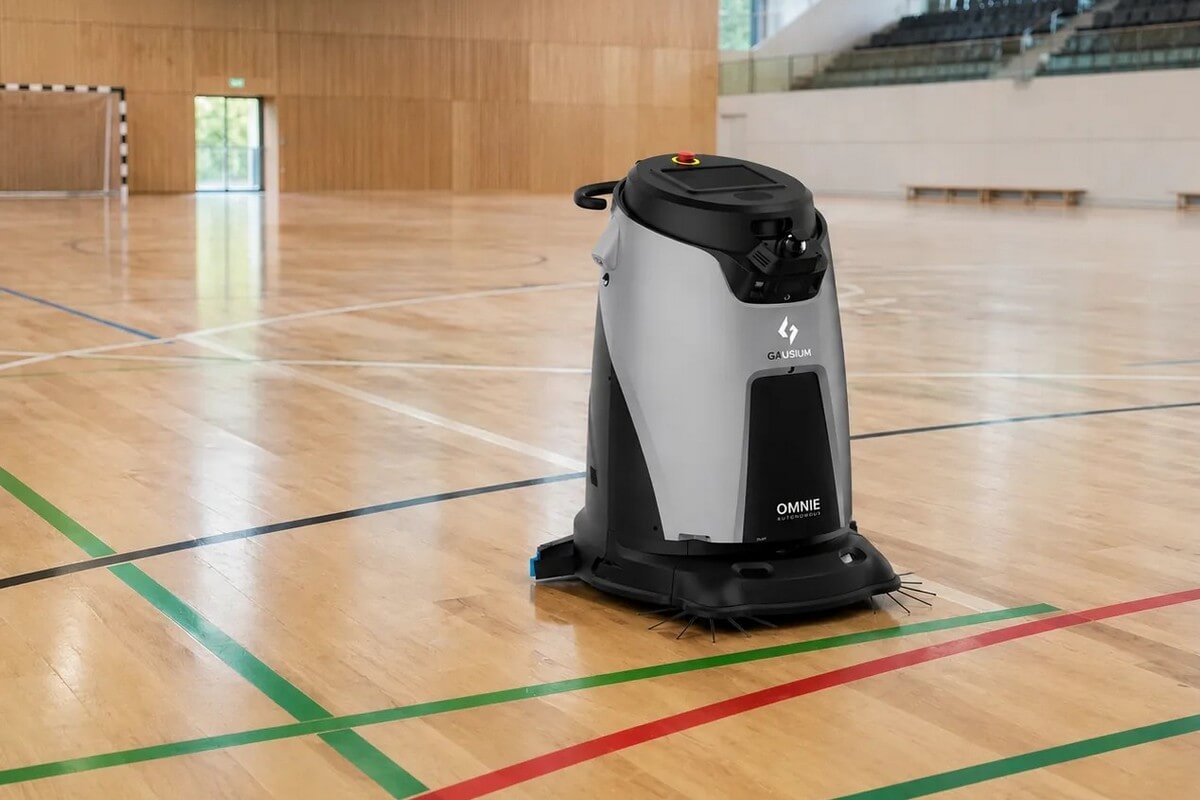
What does a cleaning robot actually solve in daily operations?
In schools, the challenge is not just cleaning itself, but having the cleaning team available at the right time. Staff need to be on-site early in the morning, between shifts, or after school hours, and staff shortages immediately affect cleaning standards. A robot reduces this dependency, particularly for repetitive tasks where maintaining the same pace would otherwise require additional resources or higher costs.
A second benefit is consistency. In a building with heavy foot traffic, the difference between a good cleaning day and a poor one quickly becomes visible on the floors. A robot follows predefined routes, maintains consistent operating routines, and can be scheduled to work during periods when the building is less busy. For facility managers, this means fewer variations and greater control over cleaning results.
There is also the reporting component. Professional models provide data on the area covered, cleaning cycles completed, operating time, and the status of consumables or battery levels. For institutions that need to document processes, monitor service providers, or optimize staff shifts, this data matters. Cleaning becomes less dependent on subjective perceptions and more driven by measurable operational performance.
Which type of cleaning robot makes sense for an educational institution?
There is no one-size-fits-all answer, because the layout and operational profile of a school can vary significantly. A modern building with wide corridors and hard floors requires a different automation approach than an older, compartmentalized school with numerous thresholds and narrow spaces.
In most cases, the discussion starts with robotic floor scrubbers or robotic vacuuming and sweeping machines. If the surfaces are predominantly hard floors exposed to heavy foot traffic, automated floor scrubbing usually delivers the most visible results. If the building has areas with significant amounts of dust, sand, or debris brought in from outside, sweeping or vacuuming capabilities become a priority
Autonomy is another important factor. For a large school, an undersized machine can quickly become a source of frustration, even if its purchase price seems attractive. If the robot needs frequent recharging or cannot cover a meaningful cleaning shift, the operational savings decrease. That is why equipment selection should be based on the actual floor area, occupancy levels, available operating windows, and flooring types, rather than on technical specifications viewed in isolation.
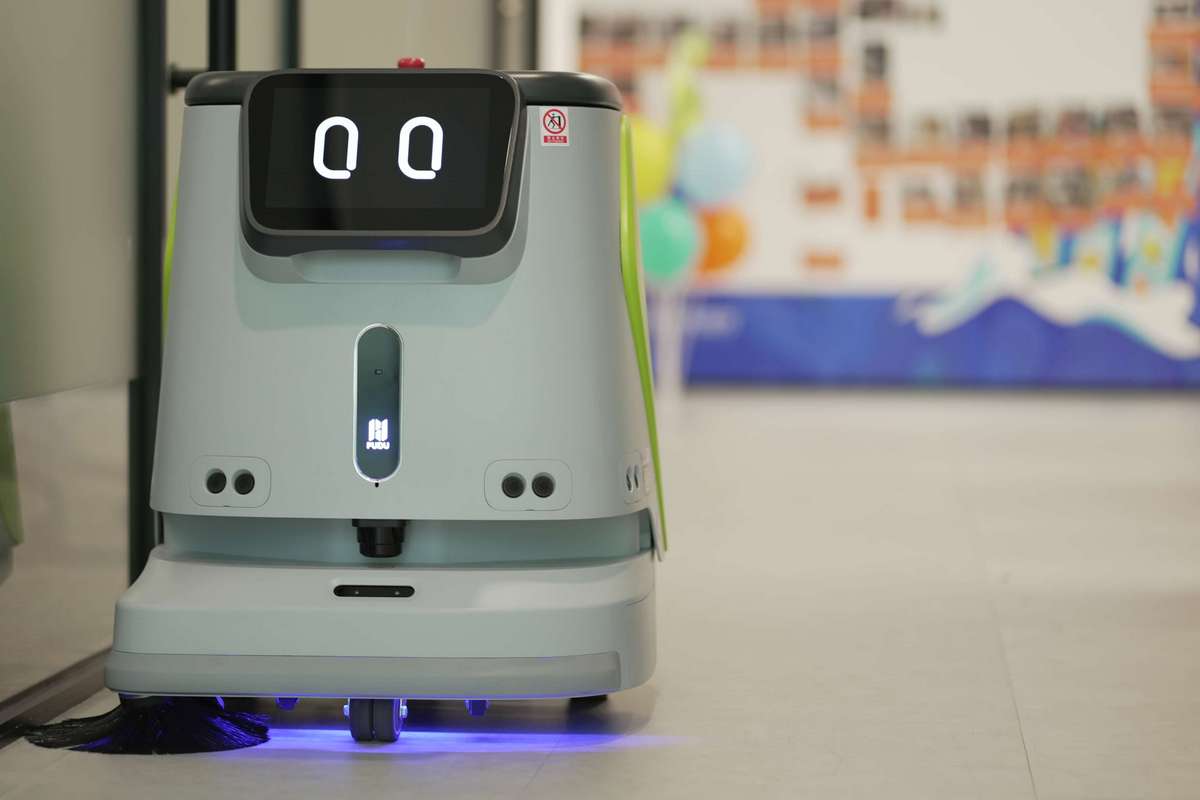
Proper implementation makes the difference
A cleaning robot for schools involves much more than simply delivering the equipment. The results depend on mapping, route configuration, staff training, and integration into the building’s daily schedule. Without these steps, even a high-performance robot may end up being used well below its full potential.
Successful implementation starts with a straightforward but thorough assessment. Which areas need to be cleaned daily? When is foot traffic at its lowest? Where are there permanent obstacles, and where is furniture frequently rearranged? Which cleaning tasks are repetitive and consume the most staff time? The answers to these questions determine whether automation will generate savings or simply shift operational complexity from one area to another.
Staff should be involved from the very beginning. In many projects, resistance does not come from the technology itself, but from the perception that the robot makes daily work more complicated. In practice, the team’s role does not disappear. It evolves. Operators monitor the equipment, prepare the areas, manage consumables, handle detailed cleaning tasks, and track performance. When this transfer of responsibilities is clearly defined from the outset, adoption is much faster.
The real cost goes beyond the equipment purchase price
For most decision-makers, the key question is whether the investment is worthwhile. The answer depends on usage frequency, the floor area covered, and the current cost of manual cleaning operations. If the robot is used infrequently or only in fragmented areas, the return on investment will take longer. If it takes over large, repetitive cleaning areas on a daily basis, the resulting savings become much easier to demonstrate.
Total cost of ownership must be considered. This includes not only the equipment itself, but also consumables, maintenance, technical support, potential battery replacements, and administrative time. At the same time, these costs should be weighed against the working hours saved, fewer cleaning tasks that need to be repeated, improved staff availability, and reduced dependence on recruiting personnel for demanding and repetitive tasks.
An important advantage in the local market is the flexibility of available commercial models. Depending on the budget and the institution’s procurement policy, the solution can be implemented through direct purchase, subscription, or rental. This flexibility lowers the initial investment risk and makes it possible to test the technology in a controlled environment before expanding its use.
What should you check before selecting a cleaning robot?
In an educational environment, making the right decision requires more than a general product presentation. The equipment must match the school’s operational needs. First, check whether the machine can effectively handle the specific flooring types and levels of dirt typically found in the school. Then, assess its navigation capabilities in relation to corridor widths, the presence of obstacles, and the need to operate during periods when people are still inside the building.
Local support is equally important. A professional cleaning robot requires servicing, spare parts, software updates, and implementation assistance. Without these elements, downtime can quickly undermine the promised benefits. This is why the integration partner is almost as important as the equipment itself.
Digital management capabilities also matter. If you need visibility into equipment usage, cleaning coverage, and completed schedules, the software platform becomes a genuine selection criterion rather than an optional extra. This level of visibility is particularly valuable for school networks and campuses, where it simplifies management, monitoring, and operational standardization.
When is it not the right time to implement robotic cleaning?
There are also situations where implementation should be postponed or the approach reconsidered. If spaces are highly fragmented, furniture is constantly moved without clear guidelines, or there is no internal capacity to manage the solution, results may fall short of expectations. Professional cleaning robotics works best in processes that are stable or can be made stable. Automation cannot work miracles in a chaotic environment.
Similarly, if the only objective is to reduce immediate costs, with no interest in standardization, reporting, or operational continuity, the project risks being evaluated too superficially. In schools, the real benefits emerge when cleaning is viewed as an operational process rather than simply a list of daily tasks..
For institutions looking for a more structured approach, working with a specialized integrator such as Robotic Cleaning Solutions can significantly shorten the journey from initial interest to practical implementation. The difference lies not only in the product portfolio, but also in the ability to match the right solution to the building’s actual conditions and the team’s operational model.
The right decision starts with a simple question
Not whether the robot is impressive, but whether it can take over a clearly defined, repetitive, and measurable part of the cleaning team’s daily workload. When the answer is yes, the school gains more than just a new piece of equipment. It gains time, control, and a more predictable cleaning standard in an environment where every hour matters.